



Pickup & Delivery (P&D) is one of the most common “convenience upgrades” in fixed ops. And when it’s executed well, it absolutely improves the customer experience.
But here’s the uncomfortable truth:
Pickup & Delivery will not drive long-term service growth on its own.
It can help you keep customers. It can help you protect retention. What it doesn’t do is solve the constraint that actually limits service growth at most dealerships: capacity.
Convenience is Not the Same Thing as Growth
P&D removes a trip for the customer. That’s valuable.
But mechanically, the work still happens the same way:
- The vehicle still goes to your shop
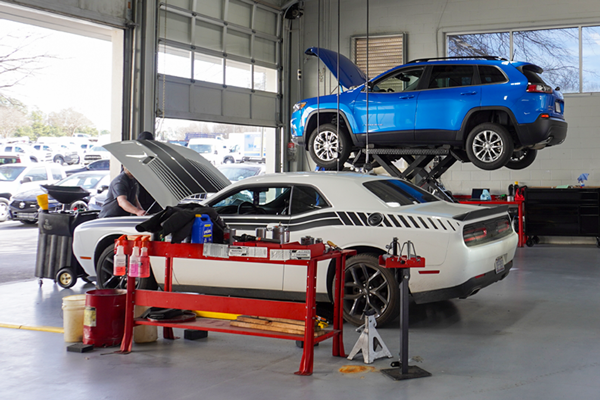
- The vehicle still uses a bay
- The vehicle still consumes technician hours in the same building
- Your throughput is still limited by the same physical bottleneck
In other words, P&D changes access, not output.
If your bays are already busy, you don’t have a “customer transportation” problem. You have a production problem.
P&D Scales Cost Faster than it Scales Results
The biggest reason P&D struggles as a growth strategy is that it behaves like a logistics business layered on top of a service business.
As P&D volume increases, the required inputs increase almost linearly:
- More drivers
- More handoffs
- More miles
- More coordination
- More exceptions (customer not home, delays, reschedules)
That’s not automatically bad — it just means P&D tends to add operating cost per RO without increasing the number of ROs your shop can produce.
So yes, you may improve the customer experience. But you may also find yourself paying a growing “convenience tax” that gets harder to justify as volume rises.
It Can Make Bay Congestion Worse, Not Better
One overlooked side effect of scaling P&D is that it can increase congestion:
- More drop-offs and pickups
- More staging needs
- More coordination between advisors, porters, and customers
- More time spent managing movement instead of production
When a store is already operating near capacity, adding complexity without adding throughput can reduce efficiency.
You’re moving vehicles more — but not necessarily producing more.
P&D is a Retention Lever, Not a Capacity Lever
This is the cleanest way to think about it:
Pickup & Delivery helps you keep customers who already want to service with you.
It makes it easier for them to choose you again. That’s good. That matters.
But it does not reliably create new service capacity.
So if you’re counting on P&D to materially increase service revenue year over year, you’re likely to be disappointed — because the model doesn’t change the underlying production math.
What Actually Drives Long-Term Service Growth
If you want growth, you need a strategy that increases production without requiring more bays.
That generally means focusing on one (or both) of these:
- Increasing throughput inside the shop (process, scheduling discipline, technician productivity)
- Creating capacity outside the shop (a true off-site production model)
That second point is where mobile service is fundamentally different from P&D.
P&D still depends on the shop.
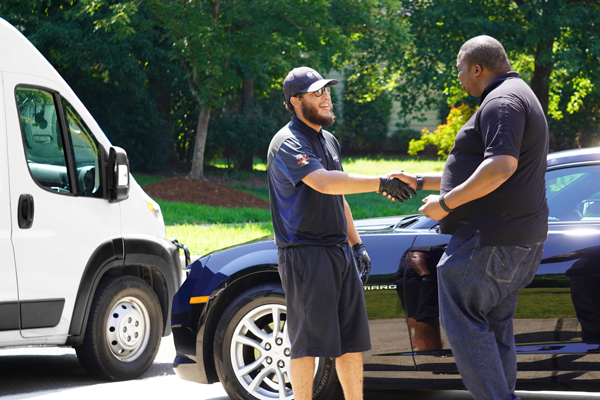
Mobile creates a production platform outside it.
The difference matters because growth is constrained by capacity — and the winning model is the one that expands capacity.
The Takeaway
Pickup & Delivery is not “bad.” In many stores, it’s a smart retention move.
But it is not a long-term growth engine because it:
- Relies on the same fixed capacity
- Adds meaningful operating cost per RO
- Scales logistics complexity rather than production
If your objective is service growth, the question is not “How do we move more cars?”
The question is:
How do we produce more service without expanding the building?
That is a capacity question — and it requires a capacity strategy.
Posted in Services, Digital Servicing