



It seems like a simple question:
Who should own mobile service?
But ownership is only part of the equation.
The deeper issue is accountability.
Mobile service cannot scale inside a dealership unless it has clear, measurable accountability.
Without it, the program merely survives.
It doesn’t scale.
Mobile Without Accountability Becomes “Overflow”
When mobile is loosely managed under fixed ops, it tends to become reactive.
- Advisors send work to vans when bays are full.
- Technicians are assigned based on availability, not optimization.
- Scheduling is adjusted daily without long-term planning.
- Metrics are reviewed occasionally, not intentionally.
Mobile becomes an overflow valve for the building.
And overflow rarely drives growth.
It absorbs pressure. It does not create capacity.
What Accountability Actually Means
Accountability is not just assigning someone to “manage mobile.”
It means:
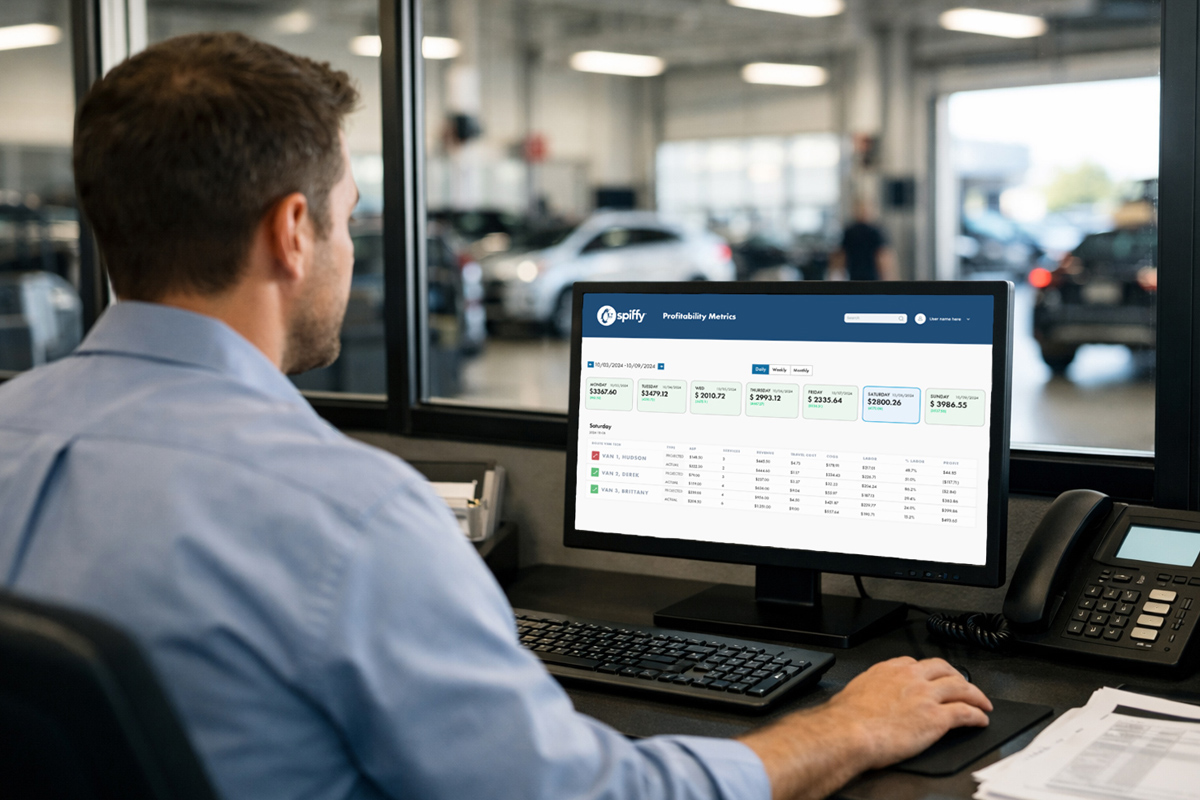
- Setting clear revenue targets per van
- Tracking daily stops and utilization
- Measuring drive-time efficiency
- Monitoring margin performance
- Reviewing customer satisfaction data specific to mobile
If those numbers are not reviewed regularly, they will drift.
And when they drift, performance lags.
The Performance Gap
Here’s what often happens in under-structured programs:
- A van averages 1–2 jobs per day
- Route density fluctuates
- Revenue per van plateaus
- Expansion decisions are delayed
Not because demand is weak.
But because no one is directly responsible for improving the metrics.
Accountability forces discipline.
Discipline improves output.
Output drives growth.
Mobile Is Operationally Different — So It Must Be Measured Differently
Fixed ops leaders are accustomed to tracking:
- Effective labor rate
- Hours per RO
- Technician proficiency
- Bay utilization
Mobile adds new variables:
- Travel time
- Route clustering
- Territory coverage
- Van operating cost
If you measure mobile solely through traditional shop KPIs, you miss half the picture.
And what isn’t measured won’t improve.
The Difference Between a Pilot and a Platform
A pilot program tests an idea.
A platform scales it.
The difference is structure.
Dealerships that scale mobile treat it like:
- A revenue center
- A productivity engine
- A measurable unit
They hold it to standards.
They set targets.
They adjust based on data.
They make expansion decisions based on performance — not enthusiasm.
Accountability Drives Financial Results
Mobile service only becomes transformative when it:
- Improves revenue per van
- Maintains margin discipline
- Increases total service capacity
- Strengthens absorption
Those outcomes don’t happen automatically.
They only happen when someone is responsible for delivering them.
The Bigger Picture
Mobile service is not just another scheduling option.
It is an operating model that:
- Changes cost structure
- Expands production capacity
- Protects retention
- Unlocks incremental revenue
Operating models require oversight.
Oversight requires accountability.
Without it, mobile remains an experiment.
With it, mobile becomes a growth engine.
The Bottom Line
If you want mobile to scale, measure it like you mean it.
Set targets.
Review performance.
Adjust routes.
Refine scheduling.
Be accountable.
Because in fixed operations, growth isn’t accidental.
It’s structured.
And mobile is no different.
Posted in Digital Servicing, Software