



Does Mobile Service Cannibalize Your Service Drive?
This is the one of the first questions most dealers ask when mobile service comes up:
“If we launch mobile service, aren’t we just pulling work out of the shop?”
It’s a fair concern. Fixed ops leaders have spent years building bay utilization, technician productivity, and absorption. The idea of shifting work outside the building can feel like you’re shrinking what you’ve worked to grow.
But here’s the reality:
In most dealerships, mobile service is not cannibalizing fixed ops. It’s protecting it.
Let’s unpack why.
What Cannibalization Actually Means
Cannibalization implies that:
- Work that would have happened in-bay
- Is instead happening on a van
- With no net increase in total service revenue
If that were true at scale, mobile would simply be a reshuffling exercise — same pie, different slice.
But that’s not what typically happens.
The Work Mobile Handles Is Different
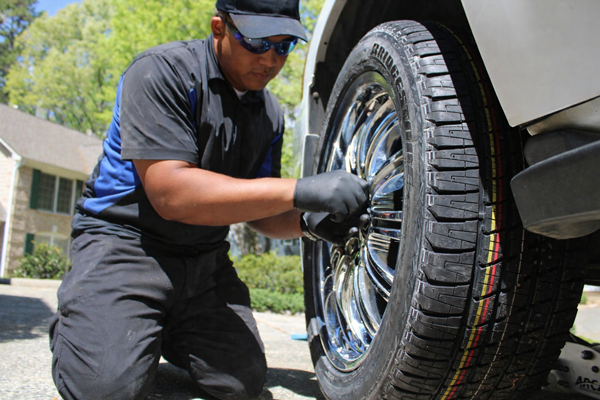
Most mobile service programs focus on:
- Oil changes
- Tire rotations
- Multi-point inspections
- Filters
- Recalls
- Light maintenance
These are the exact services most vulnerable to:
- Quick lube competitors
- Independent repair shops
- Deferred maintenance
The key question isn’t:
“Would this customer have come into my shop instead?”
The more accurate question is:
“Would this customer have serviced with me at all?”
Those are two very different scenarios.
The Real Competitive Threat Isn’t Your Van — It’s the Market
When a customer’s vehicle needs routine maintenance, they don’t always default to the dealership. They default to convenience.
If that convenience is:
- A quick lube on their commute
- A neighborhood shop
- A mobile competitor
- Or simply putting it off
These are the exact services most vulnerable to:
Then the dealership loses the RO entirely.
Mobile service shifts that dynamic.
Instead of competing on proximity to your building, you compete on access to the customer’s schedule.
That is not cannibalization. That is retention.
Mobile Often Frees Up Higher-Value Work
There’s another piece most dealers miss.
Light maintenance consumes bays.
If those jobs move to mobile, what happens inside the shop?
- Technicians can focus on heavier repair
- Advisors can sell more complex work
- Throughput improves
- Bay capacity can be allocated more strategically
Mobile doesn’t just “take” work. It can rebalance work.
In that scenario, you’re not shrinking the shop. You’re optimizing it.
The Math That Changes the Conversation
Imagine a dealership doing 20 light maintenance ROs per day.
If even 5 of those shift to mobile:
- That’s 5 bays freed up
- 5 additional opportunities for higher-value repair
- 5 customers who might have otherwise chosen a competitor
If those 5 jobs would have gone elsewhere without mobile, then the van didn’t steal revenue — it captured it.
Cannibalization assumes substitution. Most mobile programs see incremental capture.
The Bigger Risk: Doing Nothing
The fear of cannibalization can paralyze decision-making.
But while dealerships debate internal redistribution, the market is changing:
- Consumers expect convenience
- Independent shops are getting more aggressive
- OEMs are leaning into mobile strategies
- Third-party mobile providers are entering markets
If you don’t provide an easy option, someone else will.
And that is true cannibalization.
So When Does Cannibalization Happen?
It can happen if:
- Mobile pricing is dramatically lower than in-bay
- Scheduling forces advisors to steer easy work to vans unnecessarily
- The program lacks clear structure or discipline
But those are execution issues — not structural flaws in the model.
When mobile is positioned correctly, priced properly, and focused on incremental capture, it strengthens fixed ops.
The Bottom Line
Mobile service is not designed to replace your service drive.
It’s designed to protect and expand it.
If the question is:
“Will mobile service steal work from my shop?”
The better question is:
“Would I rather capture this work on my van — or lose it to someone else?”
In most markets, the bigger threat isn’t internal cannibalization.
It’s external competition.
And mobile service, when structured correctly, is a defensive move — not a disruptive one.

Posted in Services, Digital Servicing